Replaced Carpet in Three Rooms to Match the Existing Maple on the Main Level
Carpeted bedrooms were converted to 2¼" caramel maple hardwood to match existing floors, avoiding a full refinish of the main level.
See the Full Project

If you've been getting estimates for a buff and coat, you may have noticed the prices vary more than you'd expect for what sounds like the same service. There's a reason for that — and it's worth understanding before you hire anyone.
Most companies skip the deep clean
A buff and coat has three real steps: clean the floor, abrade the surface, apply a new finish coat. The cleaning step is where corners get cut most often.
At New Glow, we bring in a commercial power scrubber before any buffing or screening begins. This pulls dirt out of the cracks and off the surface — including contaminants like salt residue and cleaning product buildup that have worked their way into the floor over time.
A lot of companies skip this entirely, or do a quick vacuum and call it clean. That matters more than it sounds.
Why cleaning affects whether the finish holds
Finish adhesion is the single biggest reason buff and coats fail. If there's contamination between the old finish and the new coat — salt, grease, cleaning product residue — the new finish won't bond properly. You'll start seeing it peel or wear unevenly within months.
The deep clean isn't an upsell. It's what makes the rest of the process actually work.
The finish itself makes a difference too
After screening, we apply a two-component commercial-grade polyurethane. Most companies use a single-component water-based finish, and some still use oil-based poly.
Two-component finishes cure through a chemical reaction rather than just drying. The result is a harder, more durable surface with significantly better adhesion — which is exactly what you need in a process where adhesion is already the weak point.
It costs more. We use it anyway.
Dustless process — built for occupied homes
The commercial equipment we use is also designed to minimize airborne dust. For most homeowners in the Minneapolis area, that means you're not vacating your house for days or doing a deep clean of every surface afterward. The process is thorough without being disruptive — which matters when you're living in the space we're working in.
This is part of why dustless hardwood floor refinishing has become a baseline expectation for quality work in the Twin Cities. The equipment signals the standard.
What the cheaper version looks like
To be fair to other companies: a basic buff and coat isn't necessarily dishonest. It's just a different process — screen the floor, vacuum, roll on a single-component finish. For floors in good condition with no contamination and light traffic, it might hold fine.
But if your floors have years of cleaning product buildup, or you're in a home with pets or heavy use, the shortcuts catch up quickly.
The short version
A buff and coat done right extends the life of your floors without the cost or disruption of a full refinish. A buff and coat done fast is money spent on something that may not last.
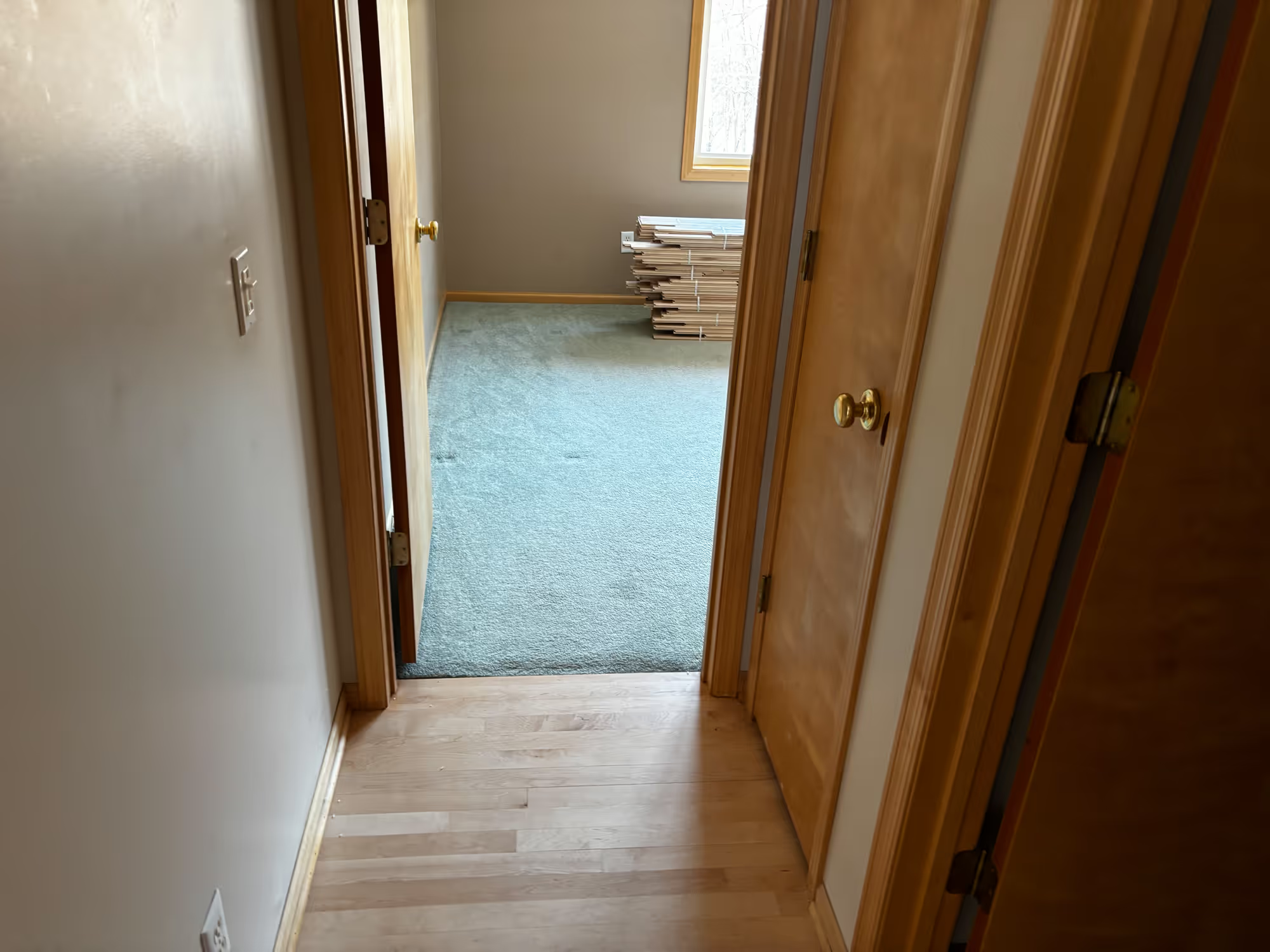
Carpeted bedrooms were converted to 2¼" caramel maple hardwood to match existing floors, avoiding a full refinish of the main level.
Learn more about our Buff & Coat service — including when it's the right choice for your floors.