
Carpet to maple, laced into the existing floor
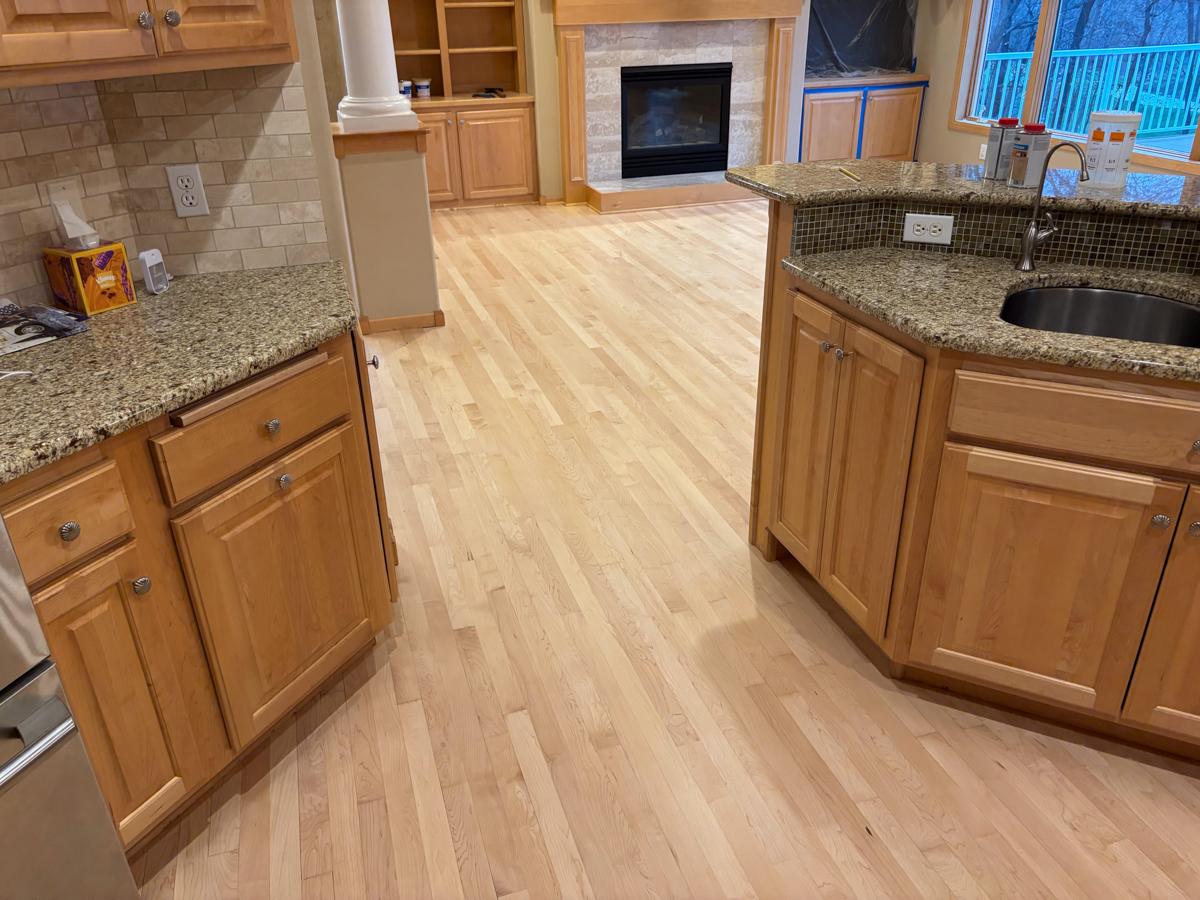
Carpeted living and dining rooms beside existing maple floors were converted to matching maple, laced in, and the whole area was sanded and refinished in a clear, durable finish.
Project Overview
Service Type
Home Type
Floor Type
Wood Species
Date Completed
Before Photos
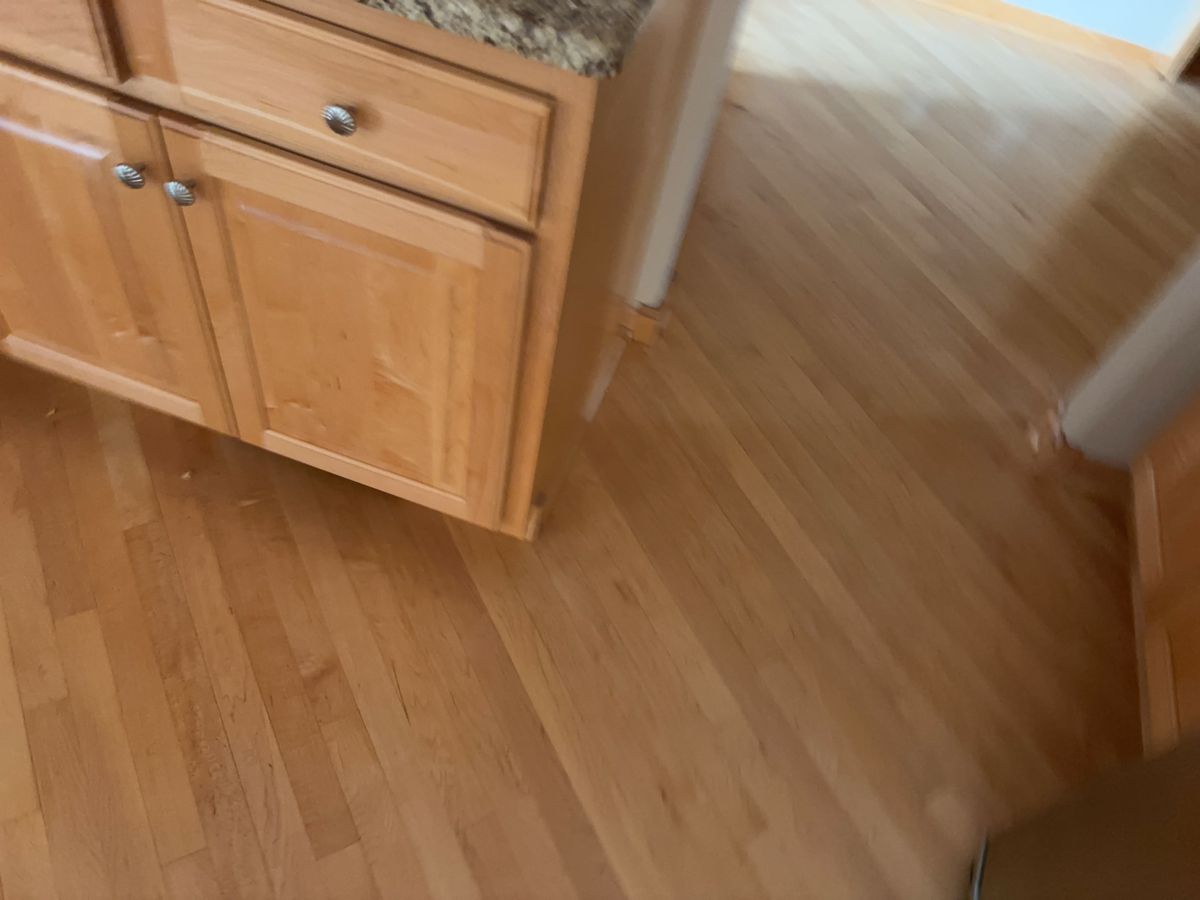
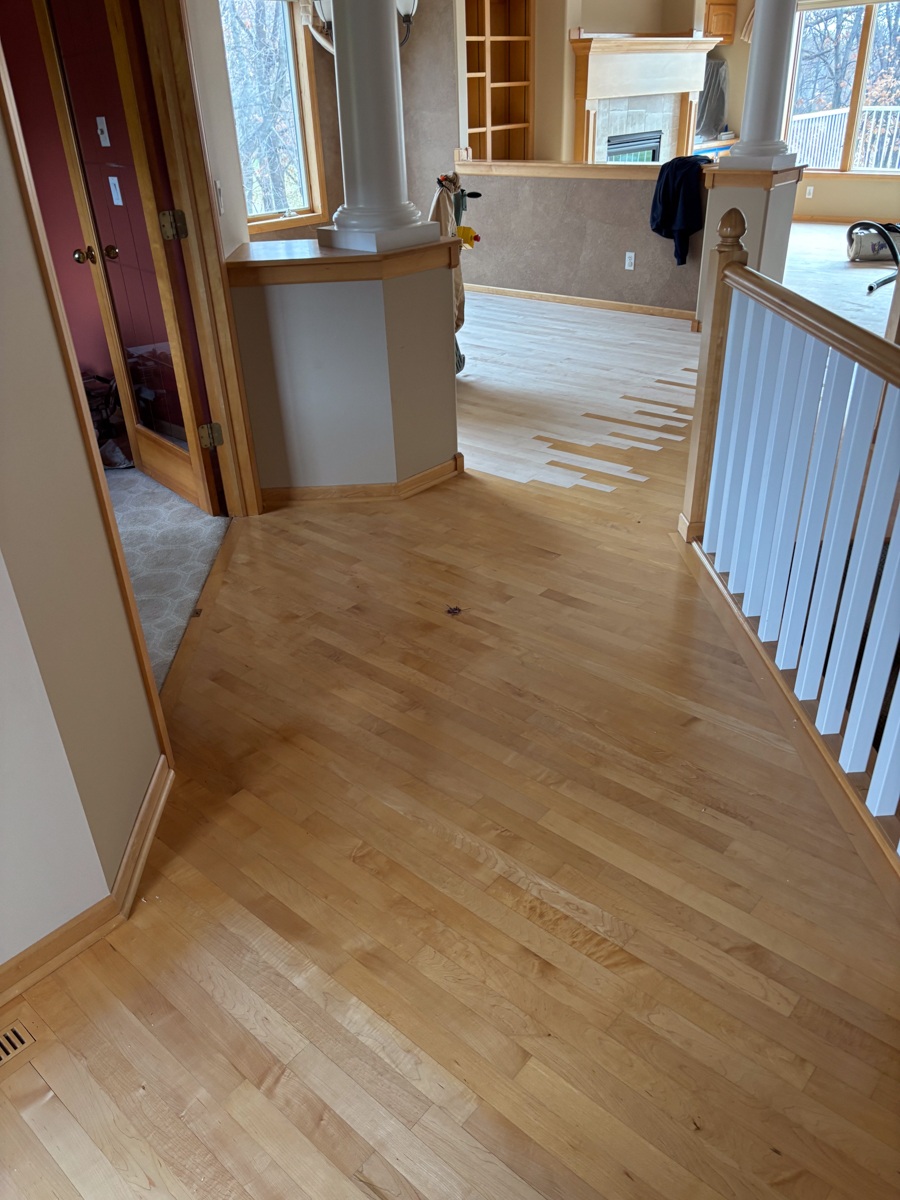
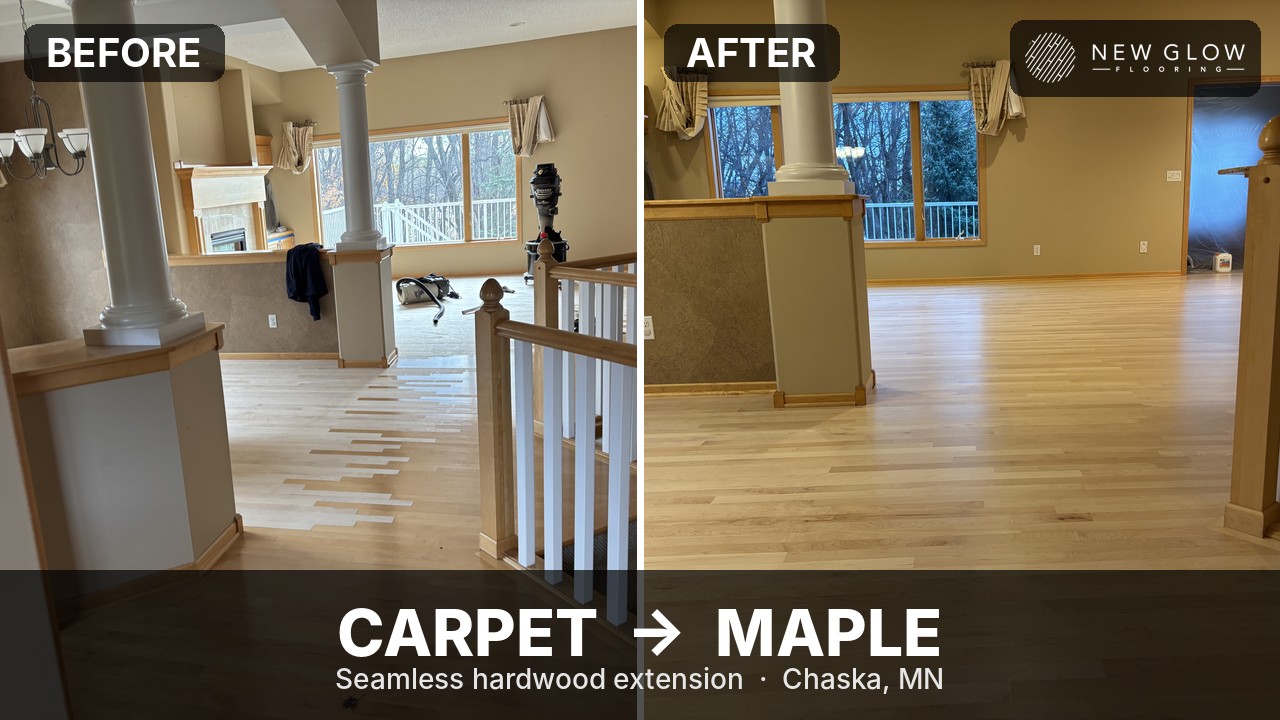
Maple hardwood floors in good condition with a yellowish tone, and carpet in the living and dining rooms.
After Photos
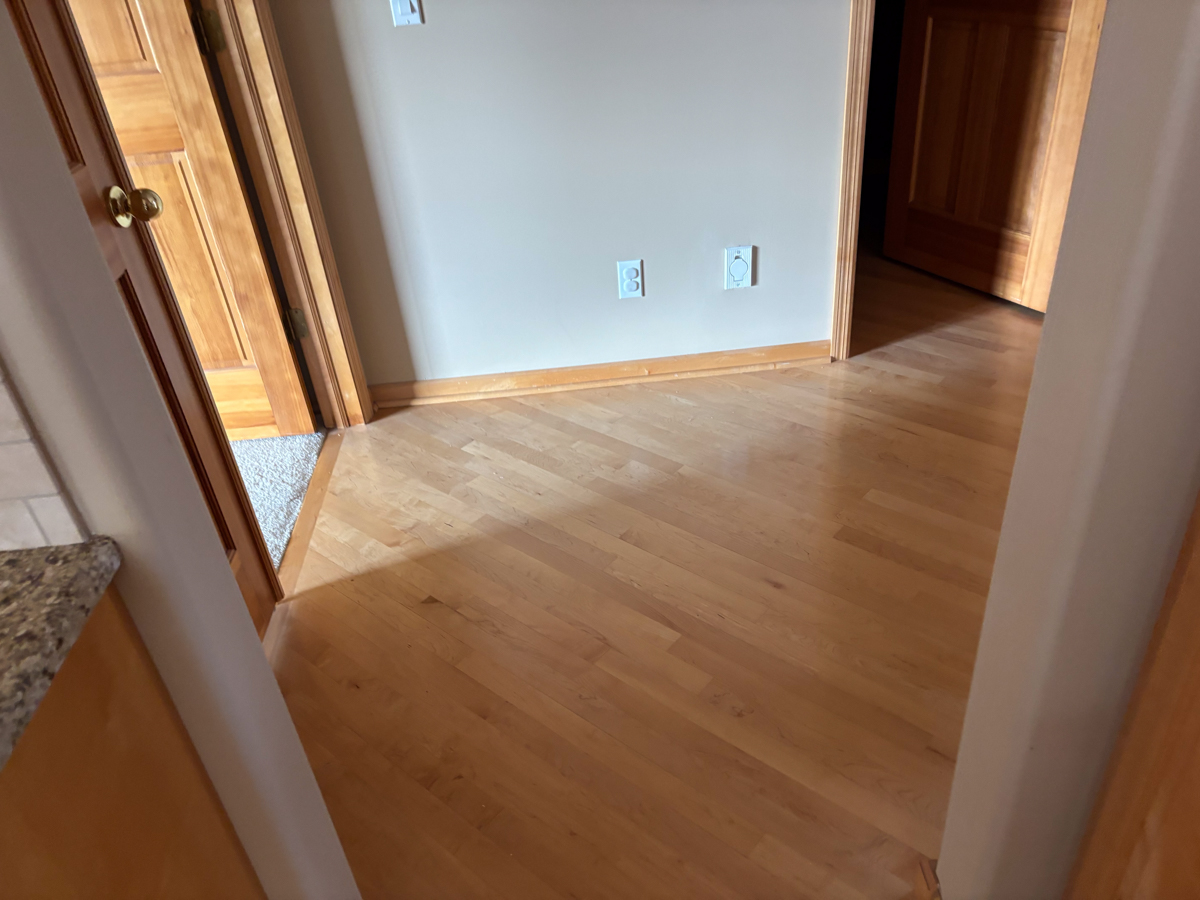
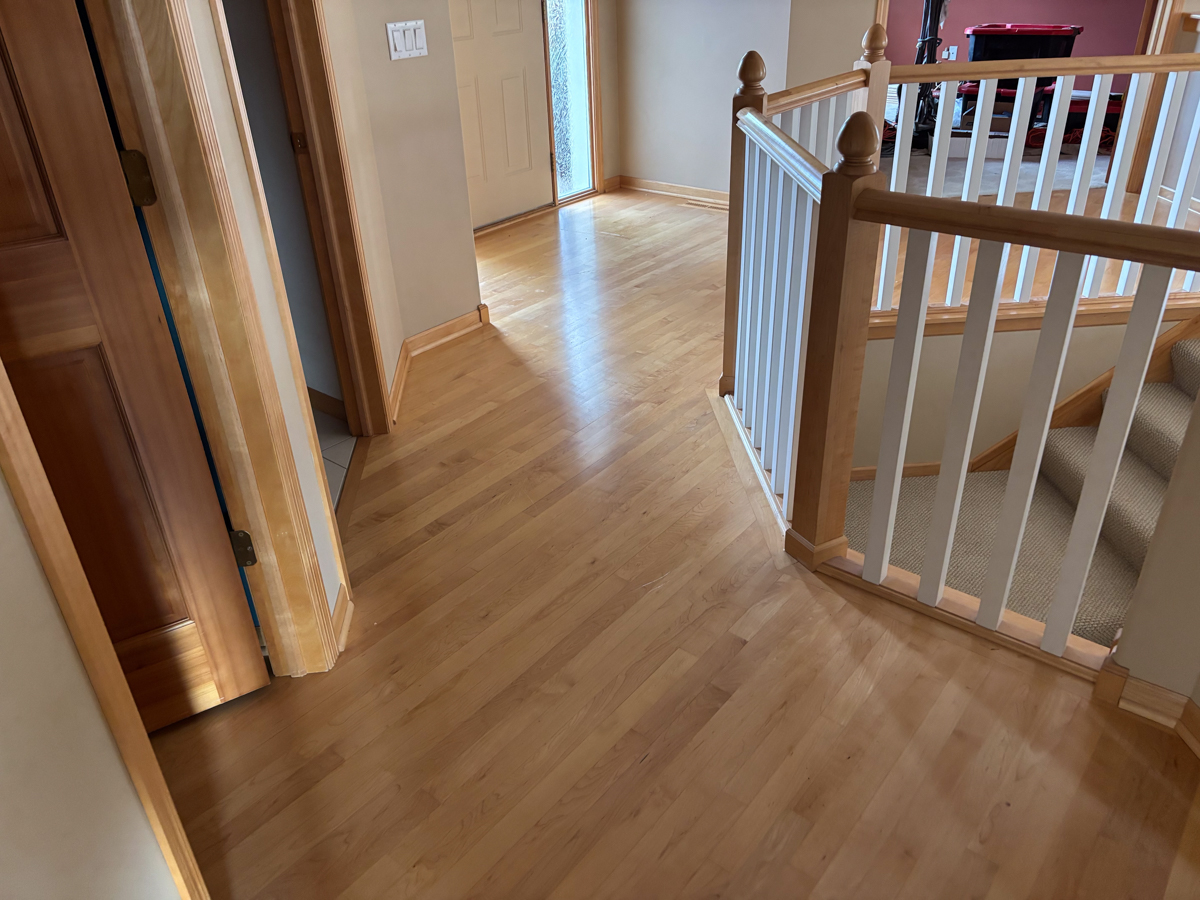
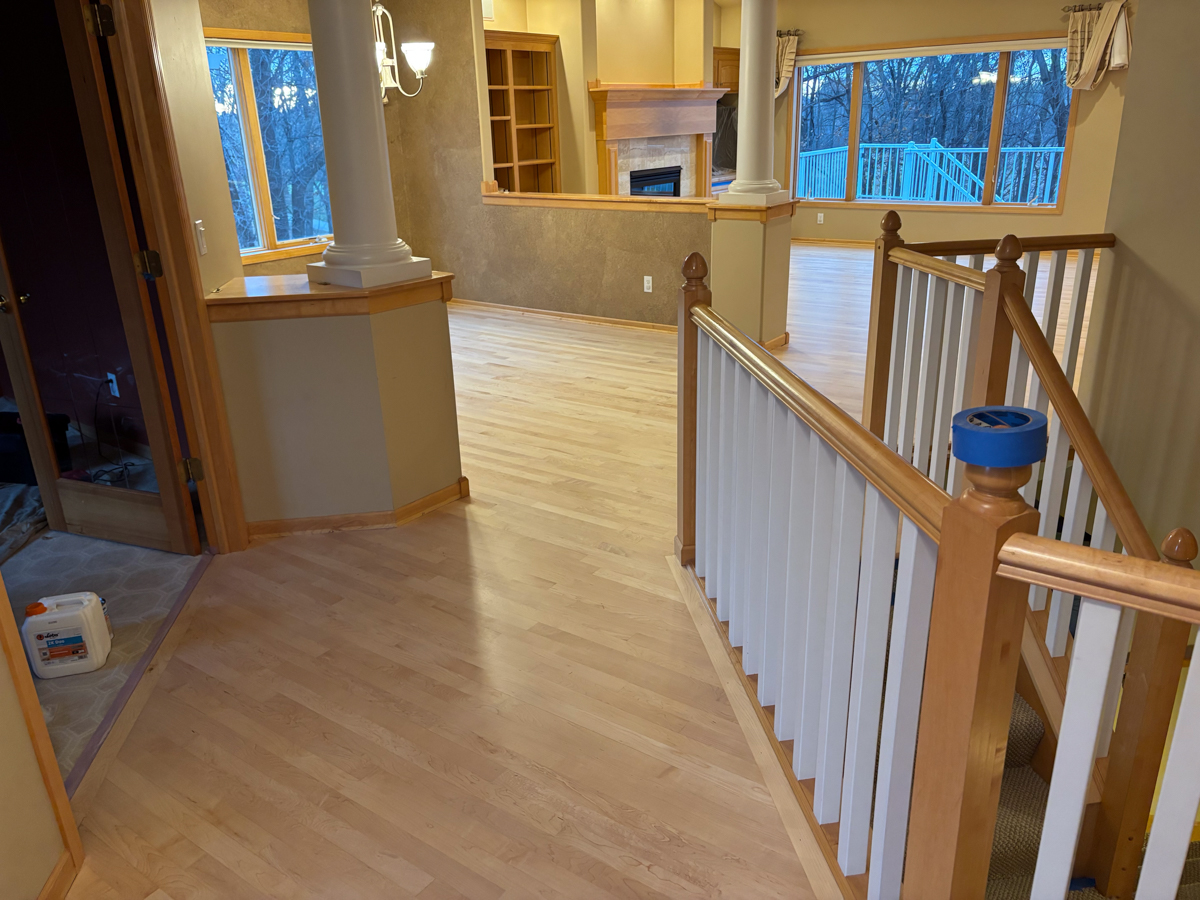
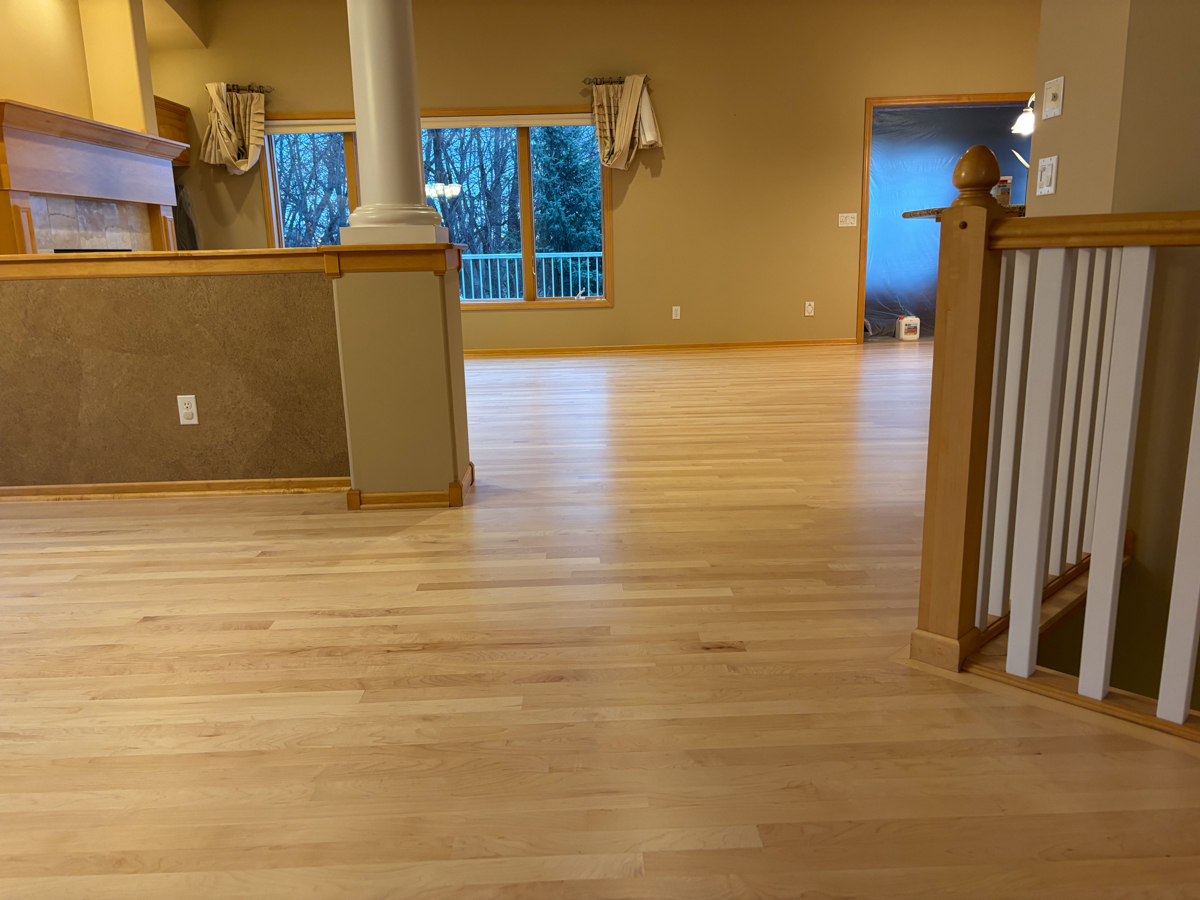
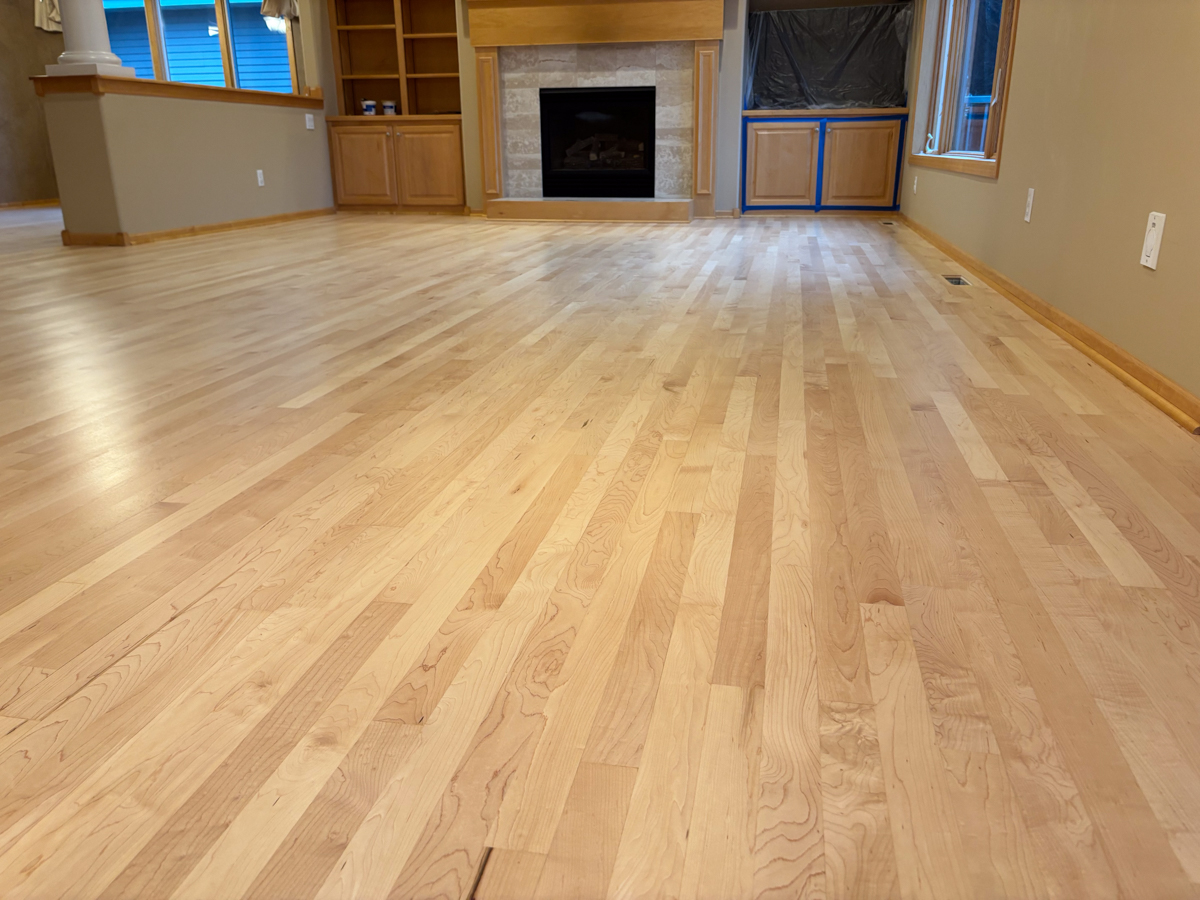
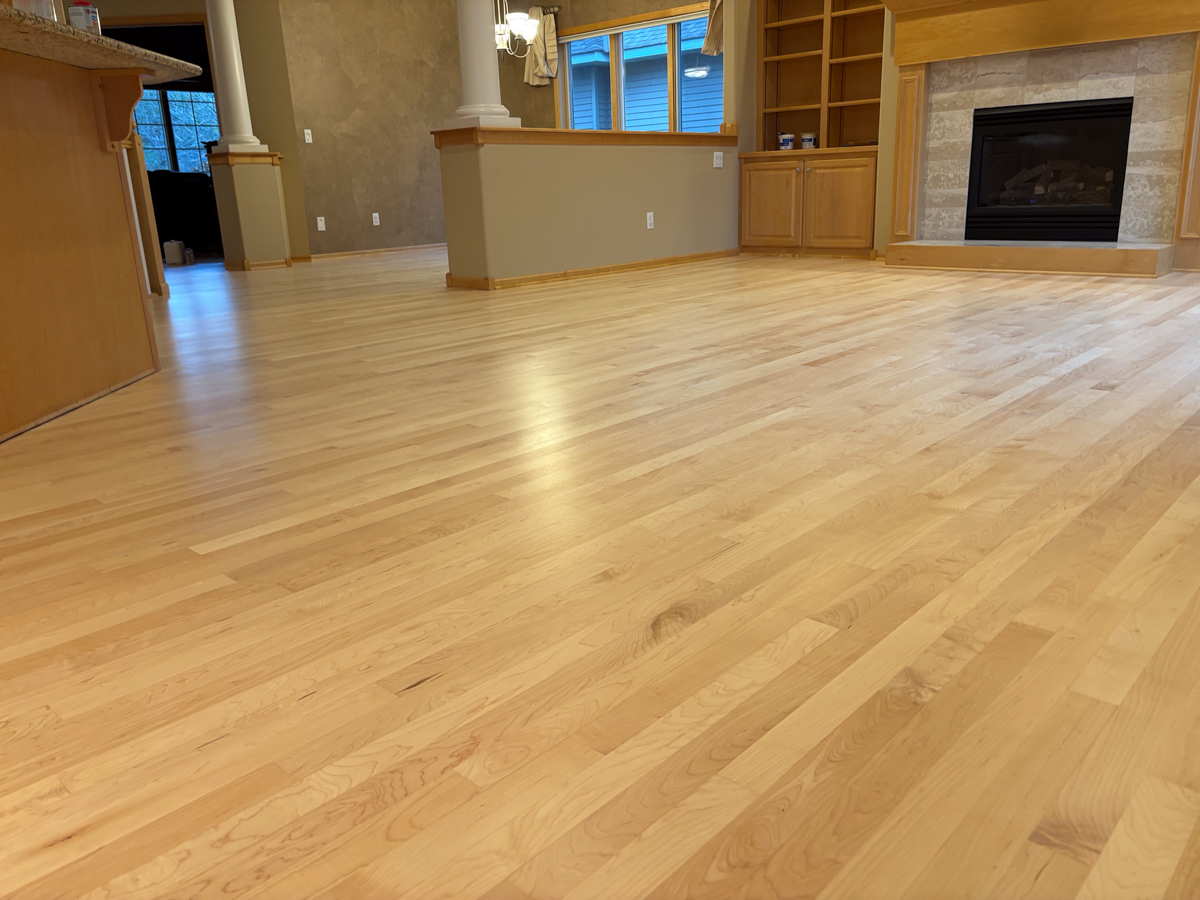
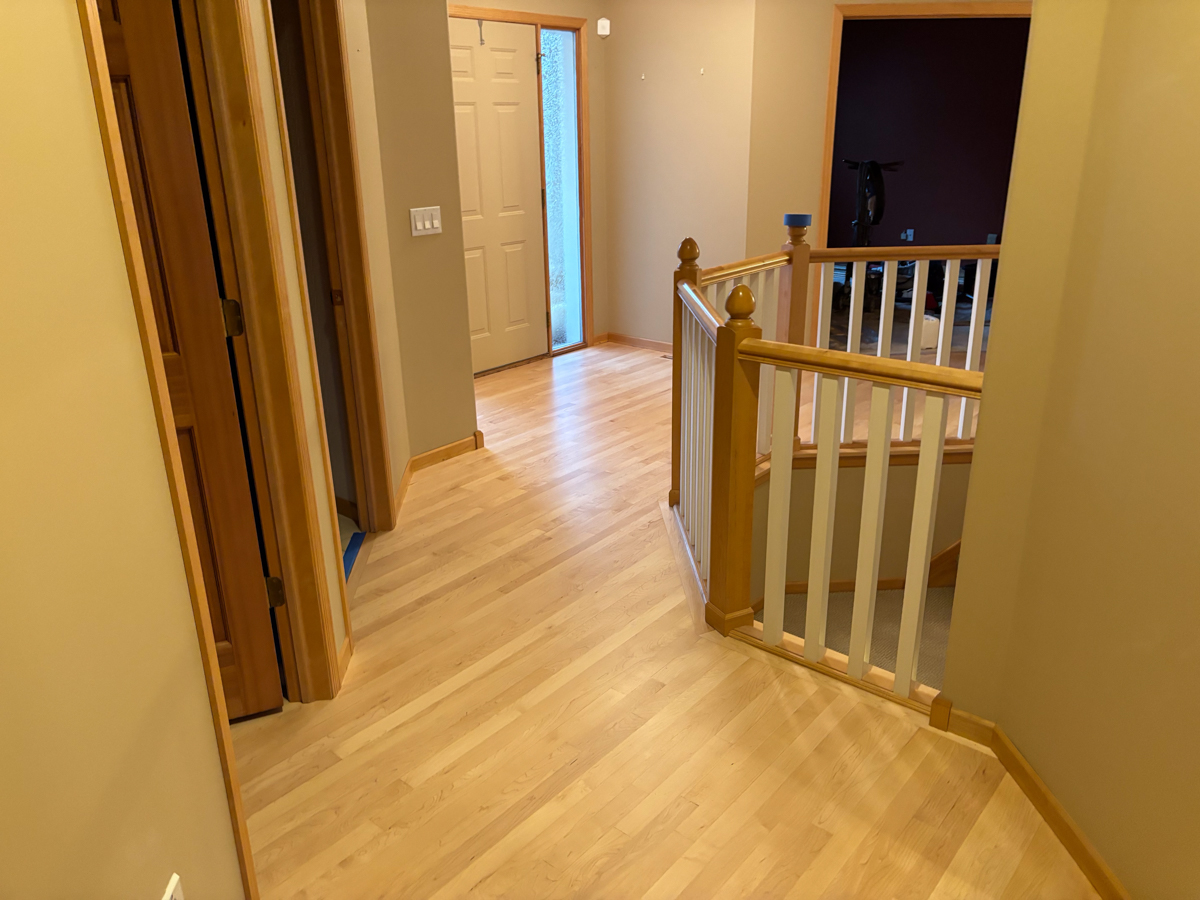
Maple hardwood floors running continuously through the main living spaces with a clear, natural tone and an even finish.
About the project
The homeowner noticed that carpet in the living and dining rooms broke up the flow of the maple floors in the rest of the home. The goal was to extend the existing hardwood into both rooms so the main floor read as one space.
After taking a closer look, we found the existing maple was in good condition. Adding new material meant everything would need a full refinish so the old and new floors would match. We chose 2¼" first-grade caramel maple, which was the closest fit for the existing floor’s color and grain. The material was delivered a week early so it could acclimate inside the home.
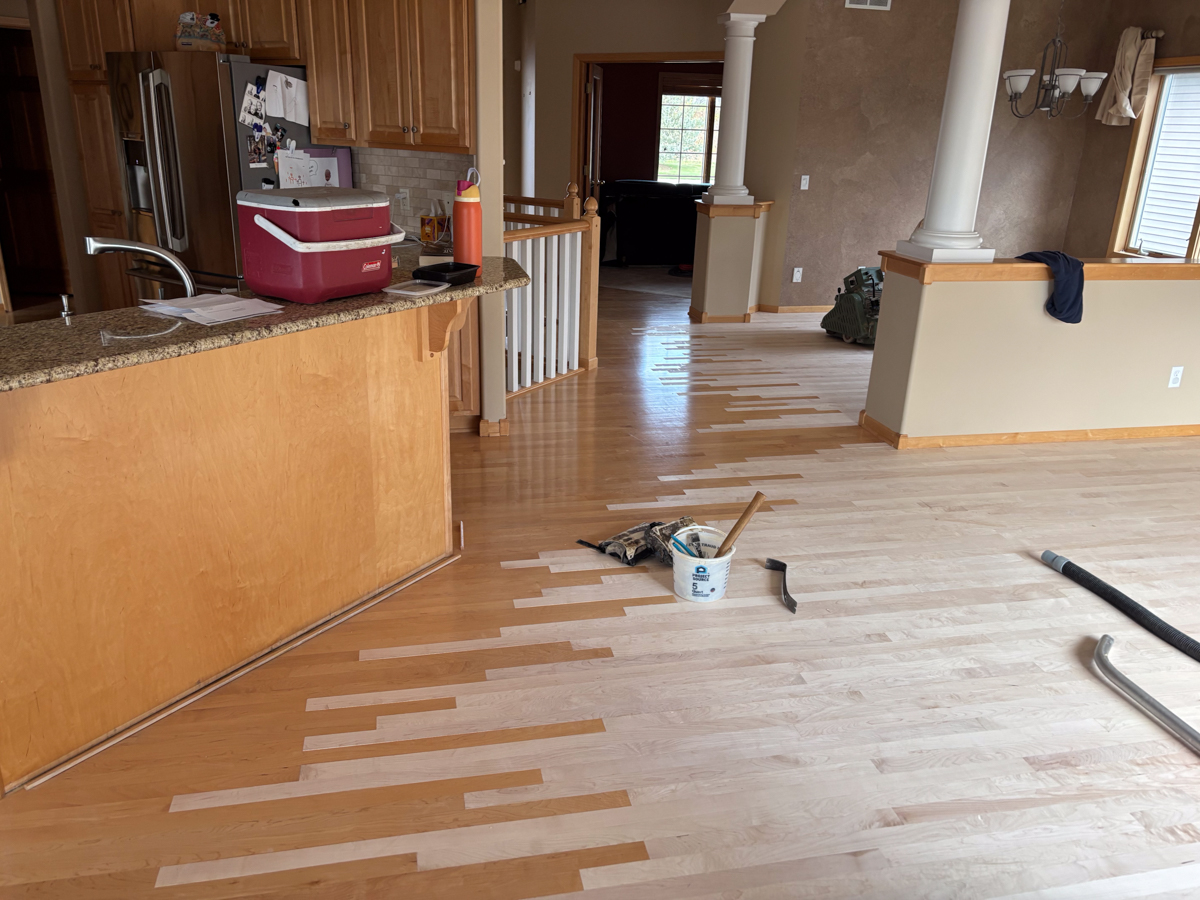
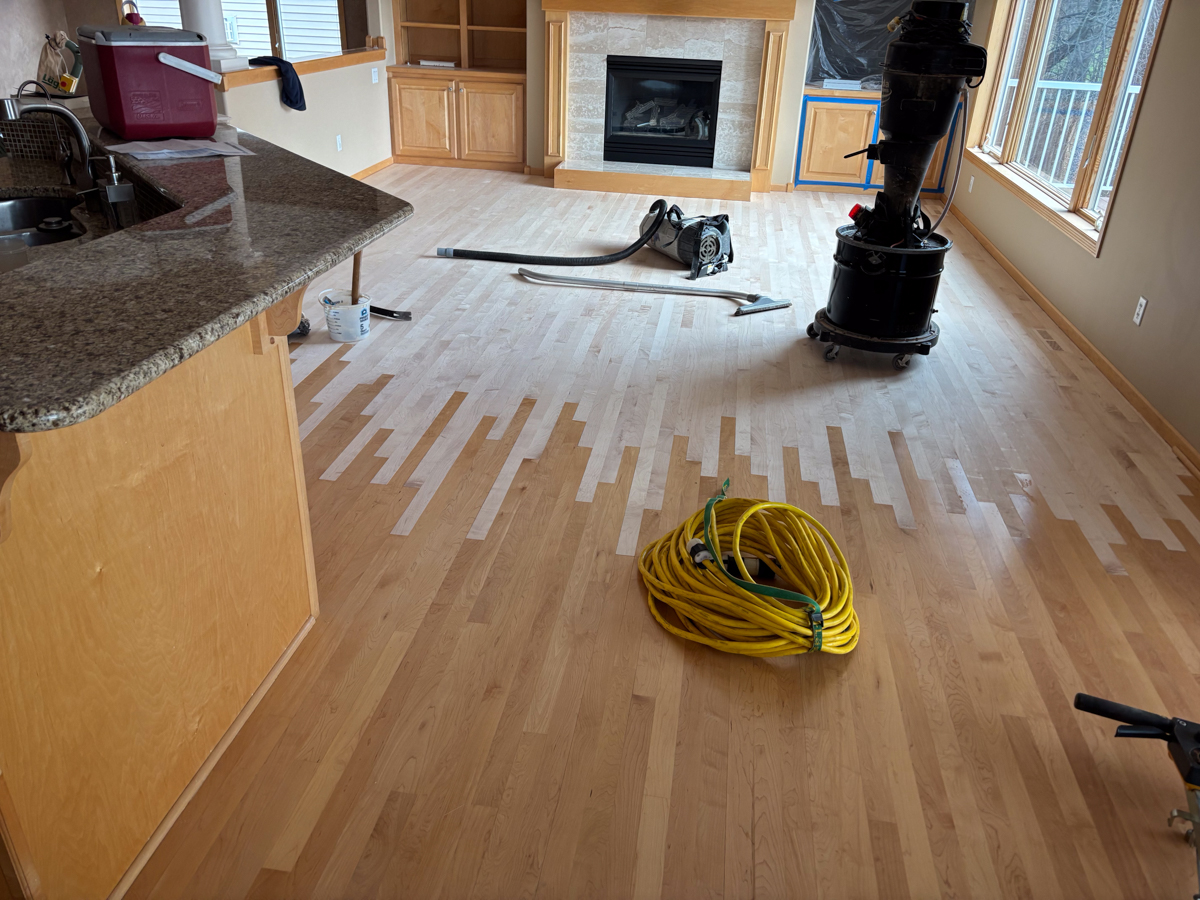
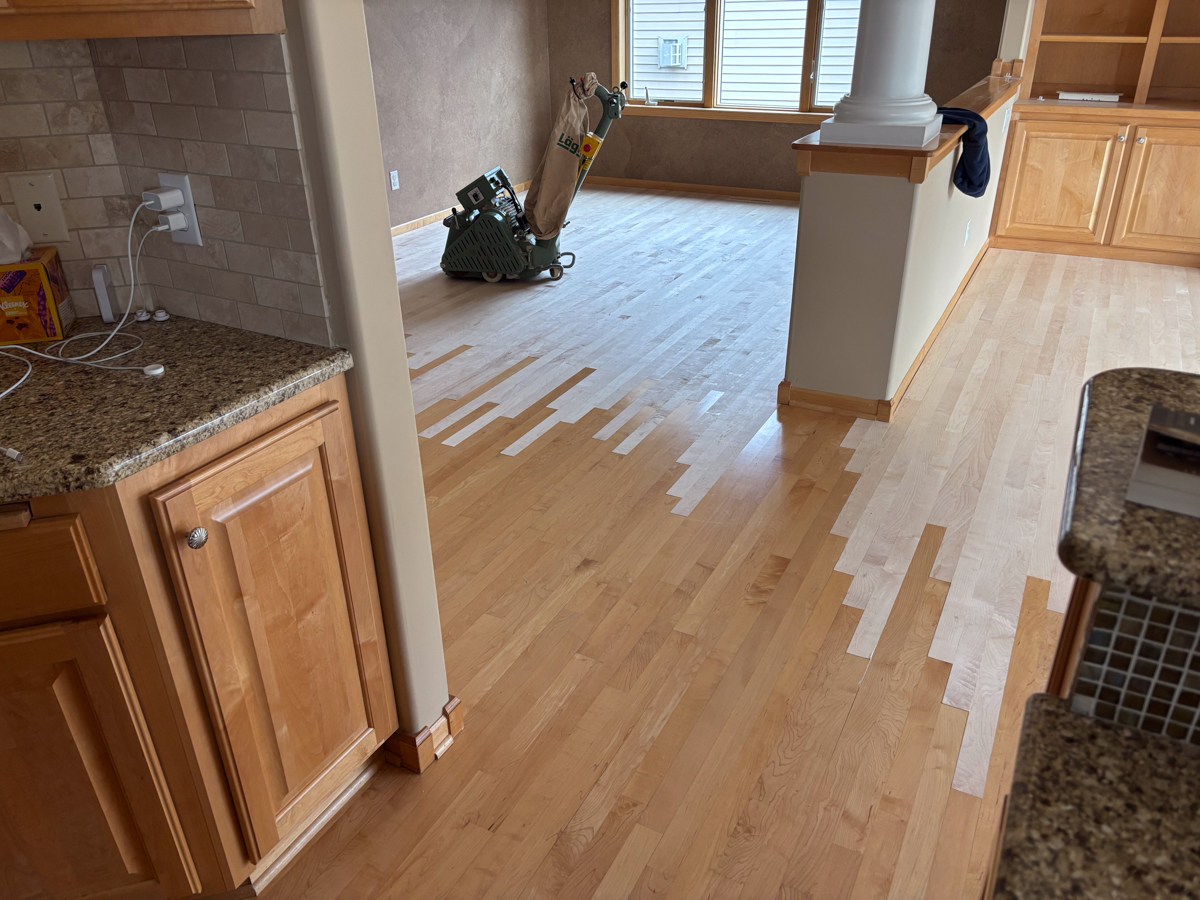
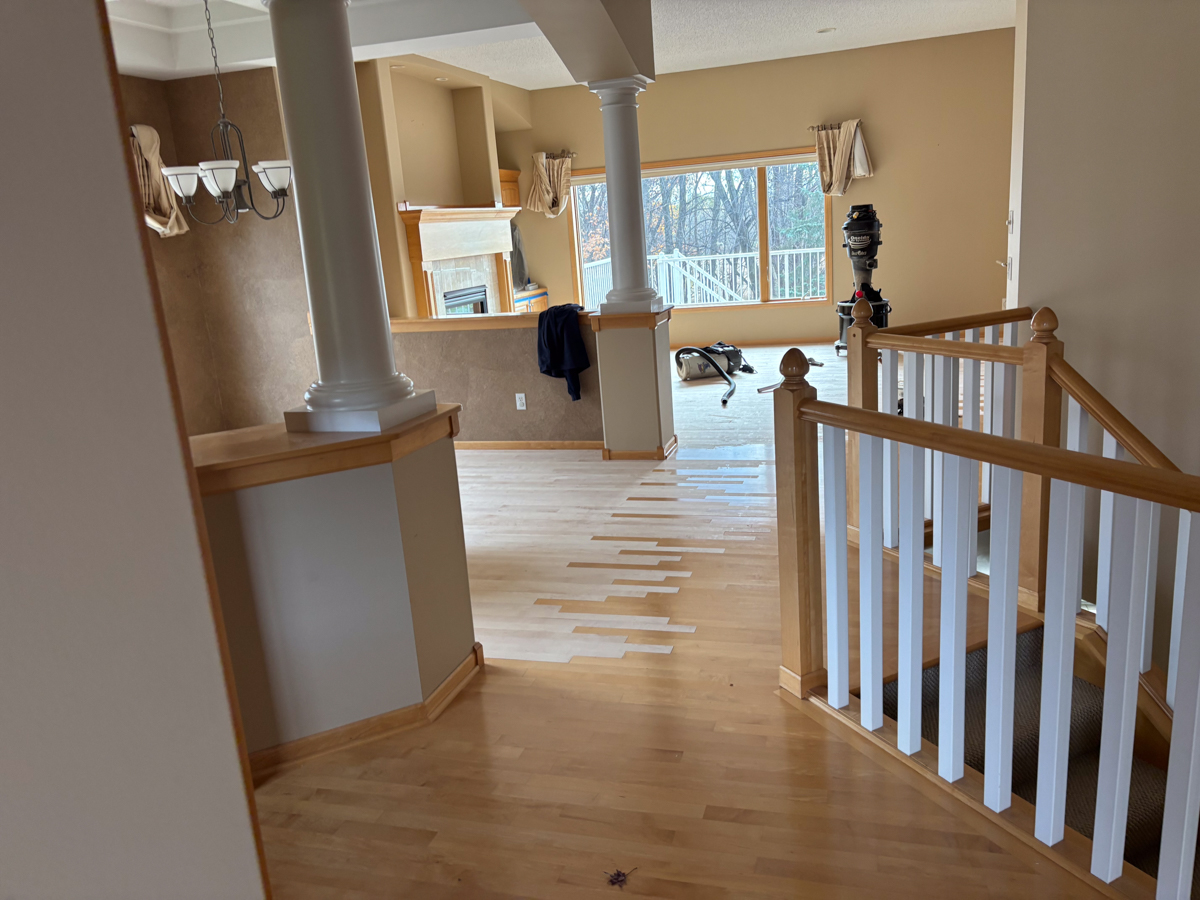
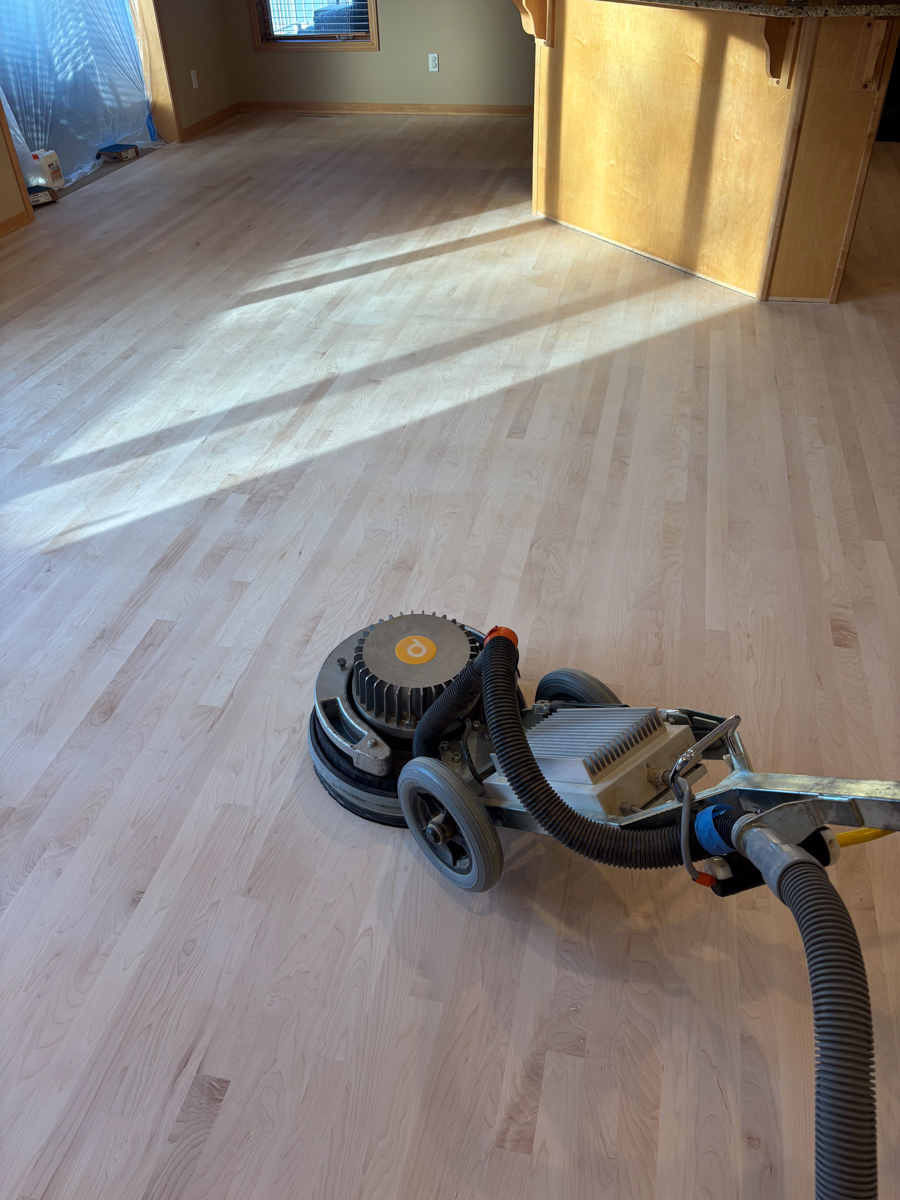
Based on that, we recommended lacing the new boards into the existing floor rather than ending them at a straight seam. Lacing takes more prep, but it gives a continuous look, as if the floor had always been installed that way. We removed the carpet, prepped the subfloor, and wove the new maple into the old. The homeowner was looking to move away from the yellow tone, so after installation we fully sanded both the new and existing floors. We finished them with a natural water-based polyurethane. They chose a two-component commercial-grade system because grandkids are often at the house, and the goal was the most durable finish available.
After the work, the new and existing maple read as one continuous floor through the living and dining rooms. The tone shifted from yellow to a cleaner, clearer natural look. Most visitors will not be able to tell where the original floor ends and the new floor begins. The commercial-grade finish is built to handle steady foot traffic and visits from the grandkids.
Finish & Materials
This video shows a Chaska home where maple hardwood was extended into a living room and dining room that used to be carpeted. Justin explains why the new boards were laced into the existing floor instead of meeting it at a seam. The video also shows the full sand and refinish that blended the new and old maple into one even, natural tone.
When we got here, the living room and dining room were both carpeted. The rest of the main floor was maple hardwood, and the homeowners were looking to carry that hardwood through both rooms.
The existing maple was in good shape. We matched it with a two-and-a-quarter-inch first-grade caramel maple and brought it in a week early so it could acclimate in the house.
We pulled the carpet, prepped the subfloor, and laced the new boards into the old ones. Lacing takes more time, but you don’t get a hard line where the new floor starts. It looks like it was always one floor.
After the install, we sanded everything, both the new boards and the original floor. The homeowners were ready to move away from that yellow tone, so we used a natural water-based finish to keep it clean and clear. They have grandkids over a lot, so we went with a two-component commercial-grade poly for extra durability.
What you’re looking at now is one continuous maple floor. No laced patch is ever completely perfect, but most people who walk in here won’t be able to tell old from new.
Now everything feels consistent again.